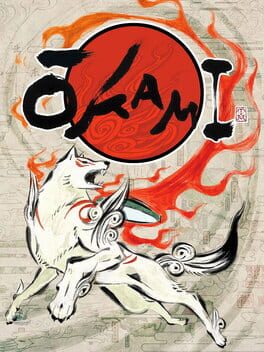
- •Name: Ōkami
- •released date: In 2006 in Japan
- •Publisher: Capcom
- Content: This game was made by the combination of several Japanese myths and legends and folklore to tell the story of how the land was saved by Shinto sun goddess. (The white wolf)
Content - Why Okami can be count as art?
1. The story - Legend:
According to Adams' statement, art should be expressed something and have the capacity to express ideas. In this game, the story was followed and developed by the Japanese classic legend; the main characters also were inspired from Japanese historical figures. For example, a major plot of the eight-headed serpent recreated as the character. The following pictures are the Japanese classic image of the eight-headed serpent and the new created image in Okami.
 |
| Tradition image |
 |
| Image in Okami |
Besides, the creater use a interactive way to express the Japanese classic culture, because player can have further understanding of Japanese classic legend through playing this game.
2. Brush Stroke:
Moreover, I think that the video game can be count as art, it should not only focus on science and technology, it also can integrate science and technology and cultural domain as process. Okami can achieve this point of view. It is because Okami features a distinct visual style and the Celestial Brush, a gesture-system to perform miracles. We can discover that on the "Celestial Brush" and the scene, the traditional writing brush stroke is the main skill in this game.
 |
| The special function - "Celestial Brush", same with writing brush |
 |
| The scene in Okami • |
Besides, the writing brush stroke is not only for providing a visual entertainment. The creater said that he wants the player can try to appreciate the traditional drawing and the beautiful scene that create with the calligraphic brush stroke.
3. Aesthetic - Gagaku:
Okami was different from other video game, it added some special music - Gagaku, a type of Japanese classic music in the game. This music was introduced into Japan with Buddhism from China.
The game coordinated the Japanese classic style in this game because music is easy to evoke traditional Japanese art as much as the graphics do and the player can feel the tradition Japanese art through this music. The music in Okami
References:
Grant Tavinor,The Art of Videogames (John Wiley and Sons, 2009)
Andy Clarke and Grethe Mitchell, Video game and art (Intellect Books, 2007)
http://www.okami-game.com/
http://en.wikipedia.org/wiki/%C5%8Ckami


